


Page 14 - hypertension_newsletter9
P. 14
REFLECTIONS
                                                                                                                   Hypertension
     Hypertension Global Newsletter #9 2025


     Results demonstrated that both TM and HBPM produced greater BP reductions compared to usual care. TM was associated
     with a mean decrease in SBP of –3.69 mmHg (95% CI –5.82 to –1.57; P < 0.001) and DBP of –1.82 mmHg (95% CI –2.98 to
     –0.67; P < 0.001). HBPM also reduced BP compared to usual care, lowering SBP by –2.73 mmHg (95% CI –5.69 to 0.22; P =
                                                                                                                   Hypertension
     0.069) and DBP by –2.09 mmHg (95% CI –3.66 to –0.52; P < 0.001). The SBP reduction was statistically significant in the TM
     group, but not in the HBPM group, whereas the fall in DBP was statistically significant in both groups. Postintervention values
     were similarly lower with both approaches, and there was no statistically significant difference between the two approaches.

     The meta-analysis found that both SBP and DBP declined more with HBPM than the usual care, the fall being statistically
     significant only for DBP. Similarly, comparison of postintervention SBP and DBP showed lowering of both in the HBPM group;
     however, the reduction was significant only for postintervention SBP. Regardless of the statistical significance, the authors note
     that the trend shows there is some lowering of BP in the HBPM group compared to the usual care group.


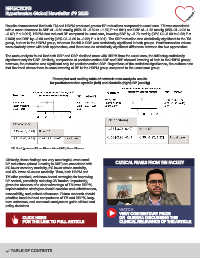
                                 Forest plot and ranking table of network meta-analysis results
                                for postintervention systolic (left) and diastolic (right) BP (mmHg)


        BP, blood presssure; CI, confidence interval; MD, mean difference.


     Clinically, these findings are very meaningful, even small
     BP reductions (about 2 mmHg in SBP) are associated with           CLINICAL PEARLS FROM THE FACULTY
     4% lower coronary mortality, 6% lower stroke mortality,
     and 3% lower all-cause mortality. Thus, both HBPM and
     TM offer practical, evidence-based strategies for improving
     BP control, potentially reducing CV burden. Importantly,
     given the absence of a clear advantage of TM over HBPM,
     implementation strategies should consider cost-effectiveness,
     accessibility, and patient adherence. Future research should
     prioritise head-to-head comparisons of TM and HBPM, long-
     term outcomes, and economic analyses to guide clinical and
     policy decisions.
                                                                          WATCH
                                                                          VIEW COMMENTARY FROM
               CLICK HERE                                                 DR. GUERRA DISCUSSING THE
               FOR THE LINK TO FULL ARTICLE                               CLINICAL RELEVANCE OF THE ARTICLE.


          TABLE OF CONTENTS

