


Page 10 - hypertension_newsletter9
P. 10
REFLECTIONS
                                                                                                                   Hypertension
     Hypertension Global Newsletter #9 2025


     This study aimed to characterise long-term CV outcomes, baseline risk factors, and real-world treatment patterns in individuals who
     met criteria for dual BP-lowering therapy. Using linked English health databases, including the Clinical Practice Research Datalink
     (CPRD), Hospital Episode Statistics (HES), and Office for National Statistics (ONS), the authors identified adults between 2005 and
                                                                                                                   Hypertension
     2019 with diagnosed hypertension who either had SBP ≥140 mmHg while on monotherapy or ≥150 mmHg while untreated. The
     primary endpoint was a composite of non-fatal MI, non-fatal stroke, hospitalisation for heart failure, and CV death. All-cause mortality
     was assessed as a secondary endpoint. Kaplan–Meier methods estimated event rates, while Cox proportional hazards regression
     was used to identify risk factors and evaluate treatment effects, with dual therapy modelled as a time-varying covariate.

     The final cohort included 1,426,079 individuals qualifying for dual therapy initiation. Over 15 years of follow-up, event rates were
     high: the composite primary endpoint occurred in 27.1% of patients and was mainly driven by CV death (the 15-year event rate for
     CV death as an individual endpoint was 18.4%), while 32.6% experienced all-cause death. Subgroup analyses revealed a difference
     in risk of CV events. Individuals with established atherosclerotic cardiovascular disease (ASCVD) had a 57.5% 15-year risk of the
     primary endpoint, compared with 22.1% in those without ASCVD, a 2.5-fold higher burden. Several baseline characteristics also
     conferred significantly elevated hazard ratios for CV events such as age ≥65 years (hazard ratio [HR] 2.97), prior stroke (HR 2.20),
     prior MI (HR 1.87), heart failure (HR 1.83), atrial fibrillation (HR 1.63), and insulin-treated diabetes (HR 1.74).
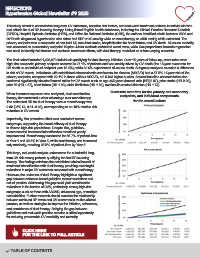
                                                                    Event rate over time for the primary and secondary
     When treatment exposure was analyzed, dual combination
     therapy demonstrated a clear advantage over monotherapy.             endpoints, and individual components
     The estimated HR for dual therapy versus monotherapy was                     for the overall cohort
     0.82 (95% CI, 0.81–0.83), corresponding to an 18% relative risk
     reduction in CV events.

     Importantly, this protective effect was consistent across
     subgroups, supporting the broad efficacy of dual therapy
     in diverse high-risk populations. Despite this, guideline-
     recommended treatment intensification remained poorly
     implemented. Monotherapy accounted for 56.7% of patient-time
     in Year 1 and 42.6% in Year 5, while dual therapy use increased
     only modestly, reaching 25.5% of patient-time by Year 5.

     This large, real-world analysis underscores the substantial long-
     term CV risk among patients qualifying for dual BP-lowering
     therapy. The findings reinforce the established clinical benefit of
     treatment intensification with dual therapy providing meaningful
     reductions in major CV outcomes compared with monotherapy.
     However, the underuse of dual therapy highlights a significant
     gap between evidence-based guideline recommendations and
     actual practice. Addressing this gap could yield considerable
     reductions in the burden of CVD, particularly among high-risk
     subgroups such as those with ASCVD, advanced age, or multiple
     comorbidities. Further research should examine the relationship
     between achieved BP levels and CV outcomes in routine clinical
     practice, as well as strategies to improve the initiation, adherence,
     and persistence of dual therapy. Bridging the gap between
     guidelines and real-world practice remains a critical opportunity
     for reducing preventable CV morbidity and mortality.


               CLICK HERE
               FOR THE LINK TO FULL ARTICLE


          TABLE OF CONTENTS

